


Dear friends,
We’re still glowing from the joy of hosting our very first Hari Orang Pulau. What began as a quiet dream, shared over conversations, hopes, and countless planning sessions, finally came to life in the most beautiful way. To see it all unfold, after years of imagining what it could be, felt nothing short of magical.
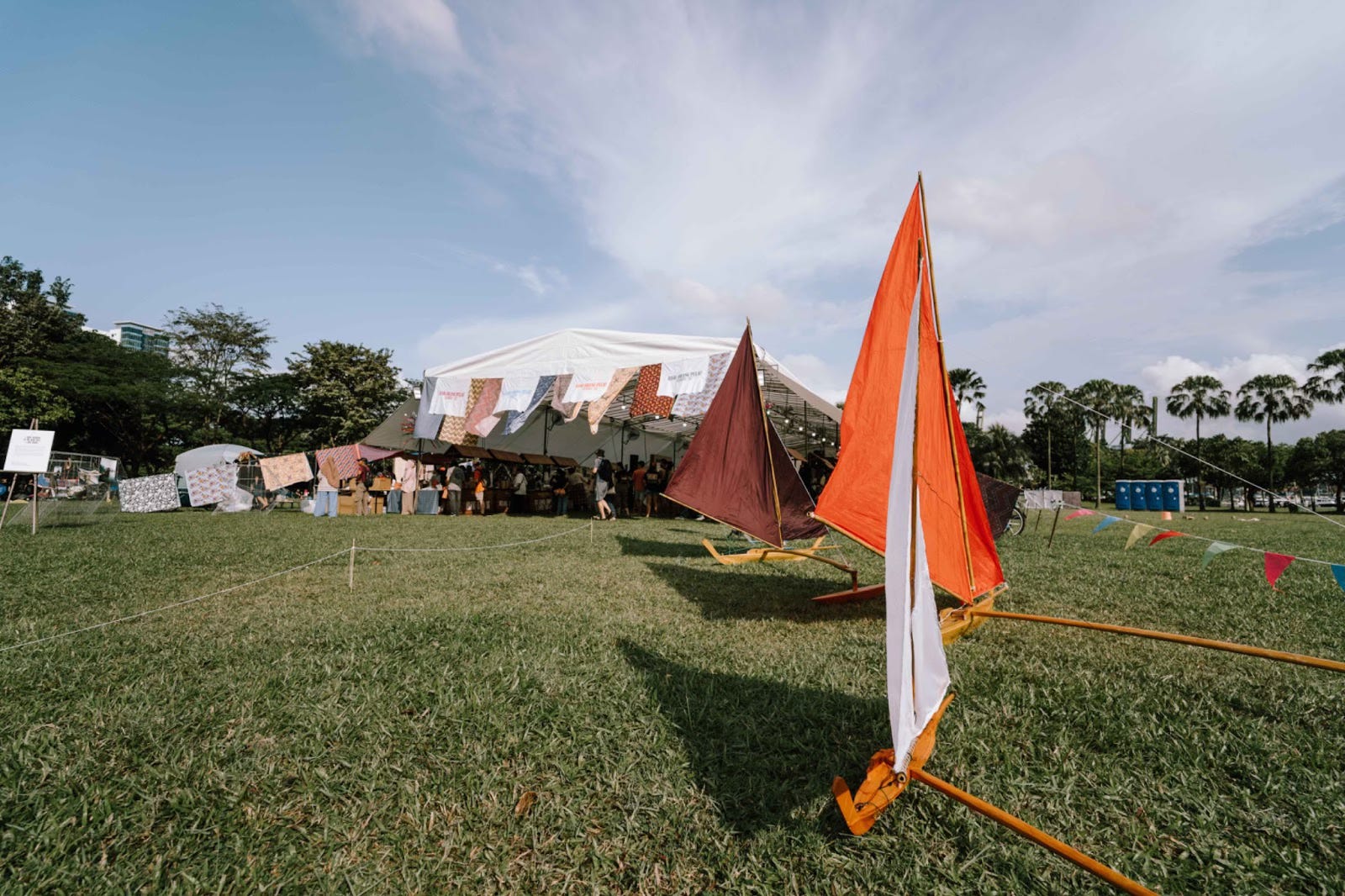
Set against the wide blue sea at West Coast Park, the festival was more than an event – it was a homecoming. This space, so important to our community, became a living, breathing celebration of our stories, culture, and kinship. From sunrise till sunset, the grassy lawn was alive with energy and laughter.
We packed the day with something for everyone: conversations that moved us, performances that lifted us, games that delighted, and hands-on workshops that brought generations together. If you joined us and stayed through the ebb and flow of it all, thank you from the bottom of our hearts.
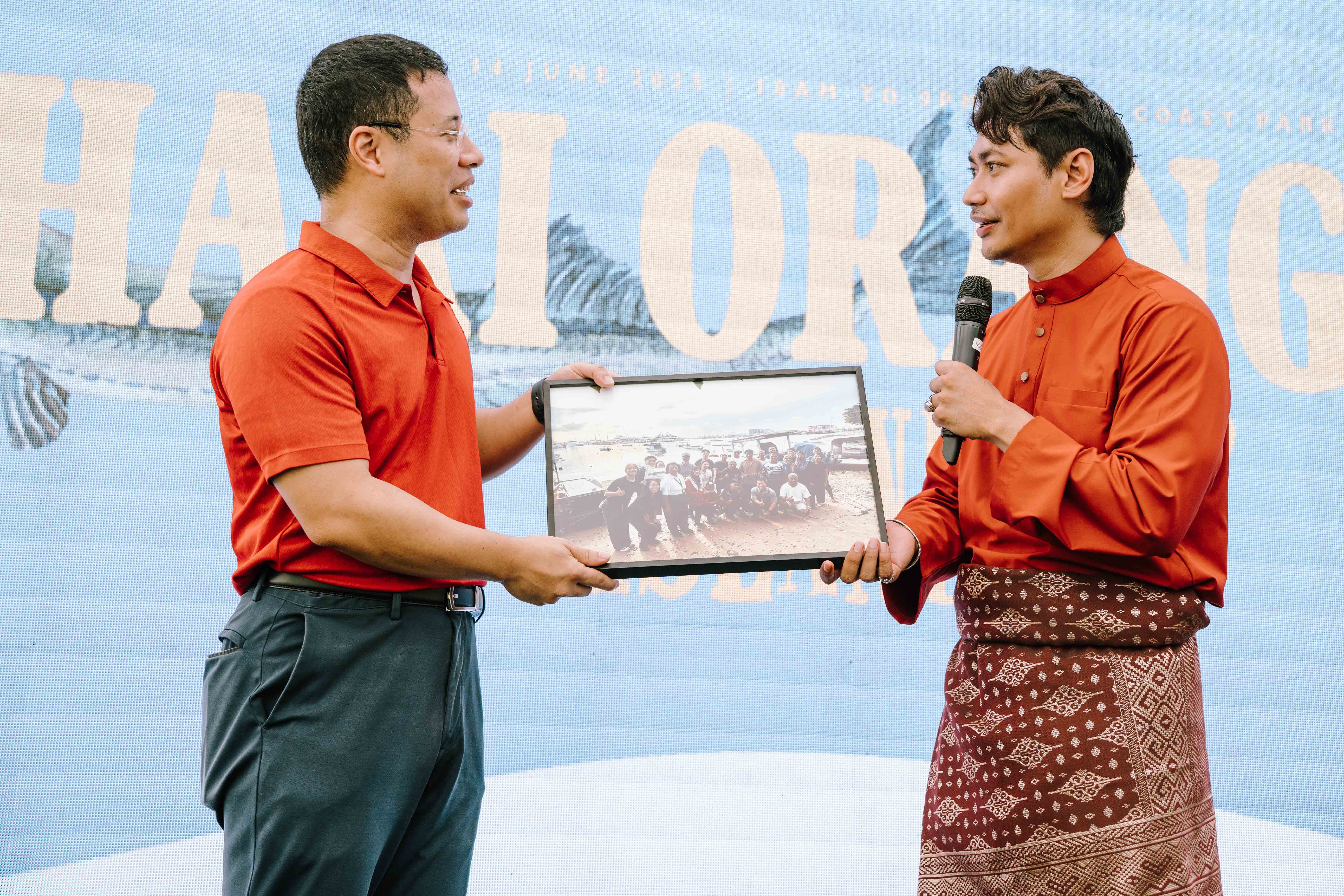
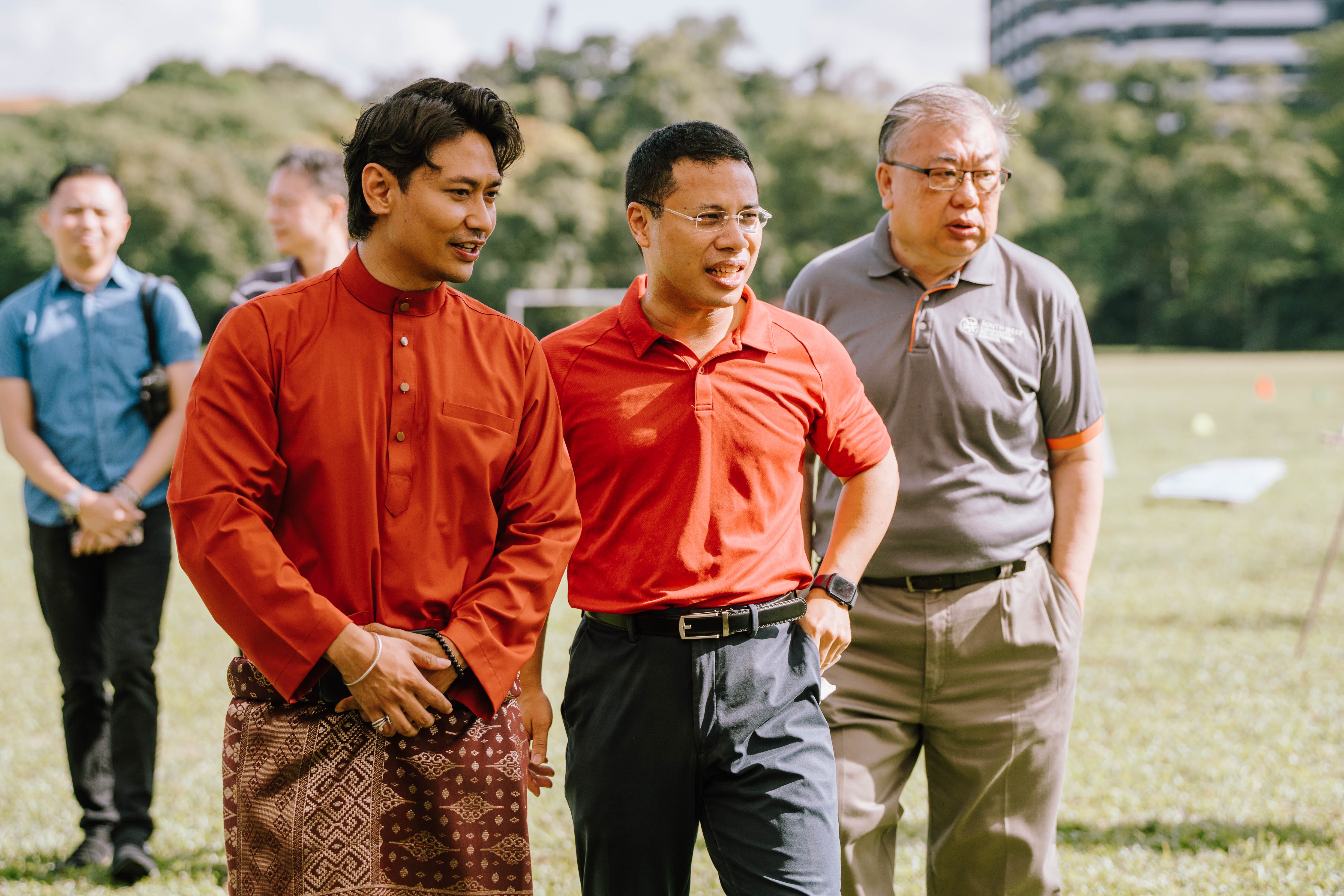
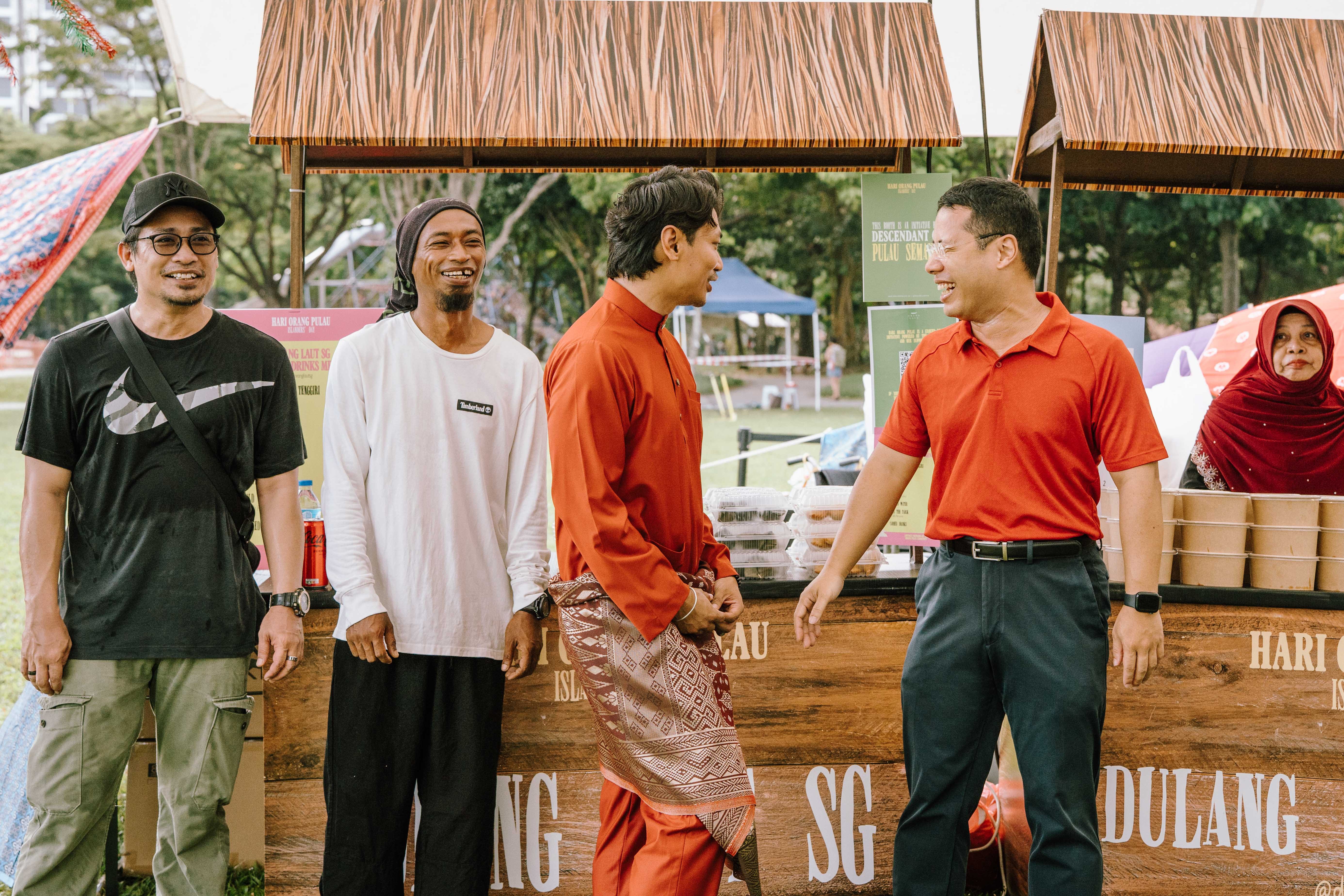
On 14 June 2025, we had the honour of welcoming our Guest of Honour, Minister for Education Desmond Lee, not just as the MP for West Coast GRC, but also as someone who has previously taken the time to listen to our community and expressed his support for uplifting our stories and presence.
We deeply appreciate Minister Lee’s acknowledgement of our community space as a “very special place”, where Orang Laut and Orang Pulau still gather, dock their sampans, practise maritime crafts, and share stories with the next generation. These words hold great significance for us.
For years, this little corner of West Coast Park has been a quiet lifeline, our last remaining communal space on the mainland. And while recognition is necessary, the reality is that the future of this space remains uncertain. It's currently held under SLA’s Temporary Occupation License (TOL), and many of our community members continue to face challenges, especially when it comes to passing on mooring spaces to younger generations.
At the event, Minister Desmond Lee announced that an inter-agency working group that includes NHB, NParks, URA, SLA, and MPA will be formed to collaborate with initiatives like ours, to strengthen support for community-led efforts. “We are going to come together and work hand in hand with you... to see how we can further the initiatives, further the community building.”, says Minister Desmond Lee. He shared that as Singapore moves forward, having a deeper understanding of our roots will give us confidence in our identity, and that this diversity is what makes our nation unique. Importantly, he spoke about ensuring that communities like ours have the support we need to connect with our past in order to shape a shared future.
For us at Orang Laut SG, this marks a major milestone. It’s something we’ve quietly and persistently worked towards for years, guided by the footsteps of our elders, and sustained by the strength of those who walk this path with us today. We hope this will open new doors: where community voices are not just invited, but heard; where the Greater Southern Waterfront can hold space for Indigenous histories; and where this last kampung corner of West Coast Park can remain a living, breathing home for those who still carry the sea in their bones.
Speech by Minister Desmond Lee at Hari Orang Pulau, 14 June 2025:
"I visited the community area at the west coast beach last November and this is the photograph that we took. It’s a very special place because the community gathers there - their boats and sampans are there. They tell their stories, they carry out their traditional craft like the making of bubu fish traps.And they opened up to the community to visit, and share stories of a time in the past, of the stories of the islands, and also shared the language of the islanders and I’m very glad that many people continue to celebrate these memories and keep heritage alive. Because heritage doesn't just live in the museum or on a storyboard. They live through stories that are passed down from generation to generation. And it’s only when people carry the torch and pass the torch from one generation to the other that you keep heritage alive and it doesn’t become history. It’s heritage because it’s living in the community.
We feel its important because as Singapore moves forward, a deeper understanding of our roots, where we came from, where our parents and grandparents came from, our stories, our traditions - these give us greater confidence in our identity. And I think that strengthens the diversity that makes Singapore's story very unique. And I want to make sure that we all have the support that we need to be able to deepen our understanding of the past, in order to have confidence in the future of this island home we call Singapore.
In that regard, we have been discussing with Firdaus and team and we are setting up a small workgroup with Orang Laut SG, with many representatives of Singaporeans who call the islands their heritage, as well as with partners like NHB, NParks, URA, SLA, MPA. We are going to come together and work hand-in-hand with you in the ground up initiative, supported by agencies to see how we can further the initiatives - further the community building.
We all are Singaporeans but we all can trace back our roots, wherever we came from in the past and we just enrich this identity that we call Singapore. "
Some of the day’s highlights:
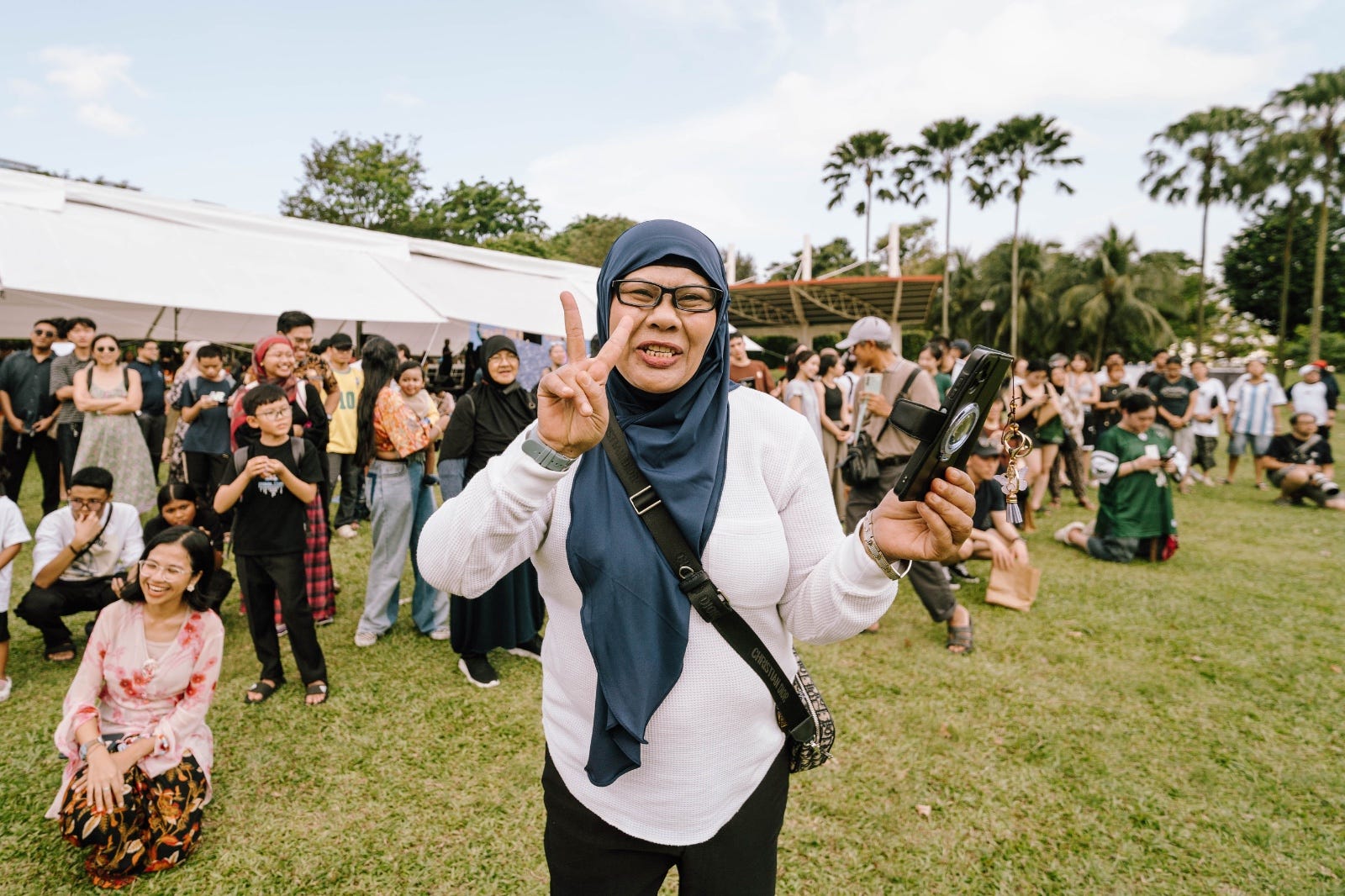
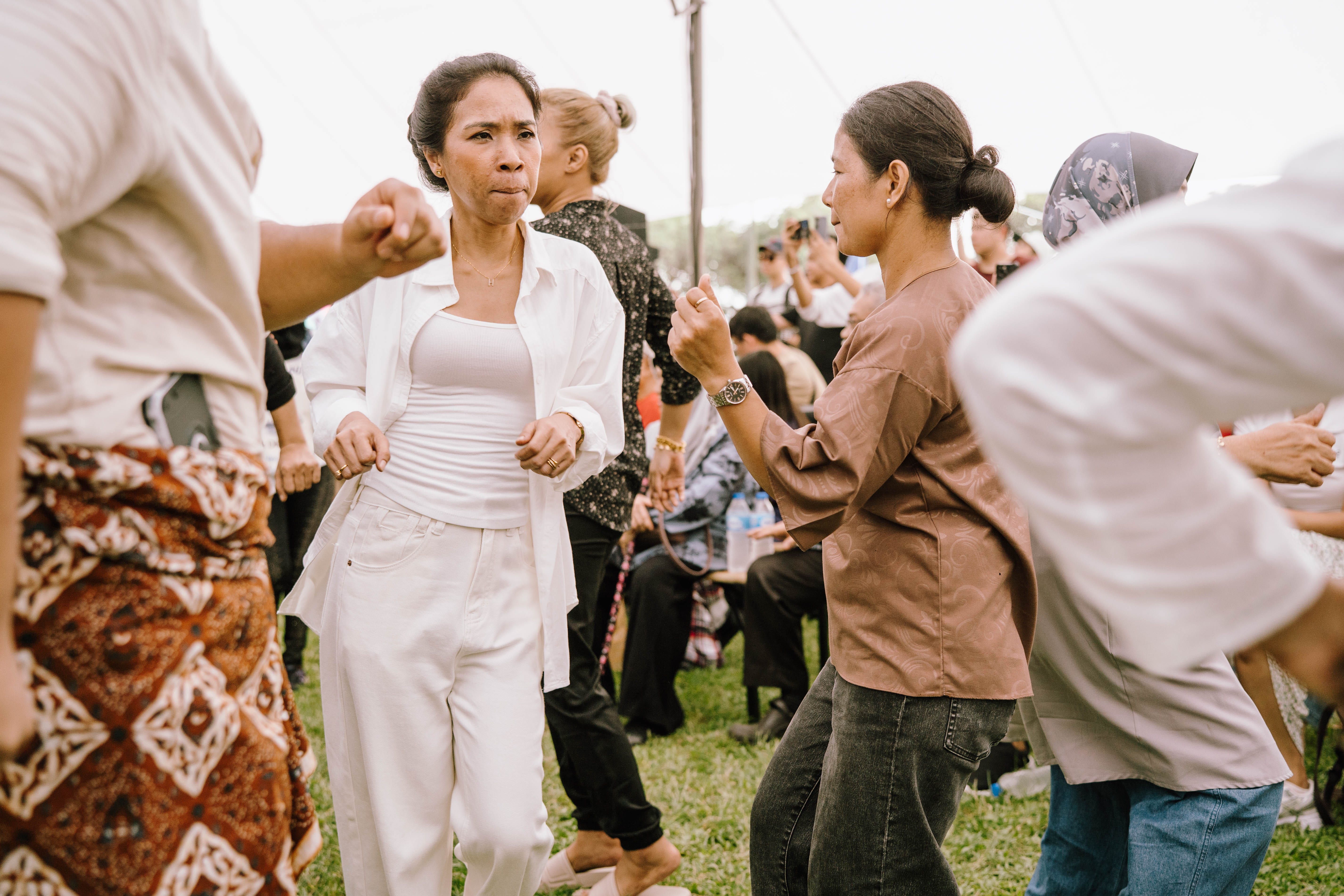
While planning Hari Orang Pulau, one thing became clear early on: “Joget Dangkung mesti ada!” - “There must be Joget Dangkung!” the islanders told us. Back on the islands, no celebration was ever complete without it. The moment that familiar dang-dang-kung rhythm kicked in, the whole island would be on their feet - young and old, dancing together late into the night.
We knew we had to bring that same spirit to West Coast Park. And when the music started… wah, our makciks and pakciks did not hold back! The joy, the memories, the movement - it was as if the islands had come alive right there on the grass.
Many of the islanders who came to Hari Orang Pulau were invited through quiet, informal networks - relatives, old neighbours, or even new friendships sparked by a simple question: “Mika dari pulau?” (“Are you from the islands?”). It reminded us that community mapping has always been there in the background—subtle, organic, and deeply rooted in connection.
Since there has never been a proper census of the Orang Pulau community after our relocation from the islands, this kind of mapping has become even more significant. That’s why we’re working closely with our research partner, Kontinentalist, to gain a clearer understanding of who we are today, where former islanders and their descendants now reside, and how our lives have shifted and evolved through resettlement. It’s about tracing not just names or addresses, but stories, memories, and kinship.
If you and your family have ties to our islands, we’d love to get to know you better! Please help share our survey below if you know any former islanders or descendants.


Amidst all the buzz and excitement at the Main Lawn, we also wanted to create space to slow down - space for listening, reflecting, and learning from one another. The four conversations held earlier in the day offered just that, opening up rich and meaningful discussions around stories that matter deeply to our community.
In “Diving Deep: Living History of Singapore’s Southern Islanders”, we were taken back to islands like Pulau Seking and what is now Jurong Island, places once filled with life and community, but now closed off to the public. Because so little is documented about these islands and the people who once called them home, it felt like a rare privilege to learn from researchers who have dedicated years to uncovering these hidden histories and tracing how both shorelines and social worlds have shifted over time.
“Ke Laut: Exploring Intercultural Connections” brought together researchers across disciplines to reflect on the sea as more than just water; it’s a connector of cultures. Waterways shaped our movements, our diets, even our languages. From maritime migration patterns to a shared love for dishes like satay beehoon (Charlene Tan, our panelist, even brought some paste to share!), it was a tender reminder of how deeply our region is intertwined.
In light of growing global concerns around climate and sustainability, “Waves of Change: Culture, Nature and Sustainability” grounded the conversation in Southeast Asian contexts. Our speakers, both researchers and community organisers, shared how islanders have long read time through the monsoons or the sun’s path, and how sustainability is more than just a trend; it requires rethinking productivity, shifting systems, and educating future generations in ways rooted in local wisdom and lived realities.
And lastly, but perhaps most intimately, we heard directly from members of the Orang Seletar, like Jeffree Salim and the Orang Pulau communities, memories of growing up by the sea, the heartbreak of resettlement, and the quiet strength of cultural resilience. For many in the audience, this was the first time hearing such stories firsthand. It was a deeply special moment, one that brought Indigenous voices to the centre, allowing them to speak, be heard, and be held with care by the wider public.


We’re deeply thankful to all our speakers and moderators who brought such honesty, insight, and warmth to the conversations. They reminded us that knowledge doesn't only come from books or formal education, it lives in people, in the stories shared over meals, in the hands that build boats, cast nets, or tend to coastal rhythms. We were moved to see so many open, curious minds in the crowd. There is so much to learn from how our elders lived, the practices they’ve kept alive, and how communities across the region relate to nature, memory, and one another. These ways of knowing are vital. They deserve to be recognised, respected, and carried forward.
Behind the scenes, the team was in constant motion, checking sound, wrangling cables, chasing shade, and keeping the flow smooth. It was our first time hosting something of this scale, and honestly, we weren’t sure how it would all come together.
One of our team members, Aqilah, was the stage manager for the day, right at the centre of the action. And like many of us, she took it in stride, fuelled by adrenaline, trust, and a deep love for the work. We leaned on each other, our amazing volunteers, and the wider community who showed up ready to help, guide, and dance.
By sunset, when the stage was pulsing with music and the lawn was full of laughter and movement, a quiet thought settled in all of us: Maybe next year, we need an even bigger space.


Over at Tanah dan Air and City Sprouts’ Community Hall, our team and volunteers were holding down the fort with a full slate of workshops that kept the energy flowing all day. Stories were exchanged over food always the best way to connect. One highlight was the cooking demonstration of Mak Noni and Mak Ani’s beloved Gulai Nenas Ikan, recently featured in a video by nOm, alongside host and friend, Azfar Mazwan. As the fragrant steam filled the air, people leaned in to learn and to taste. By the end of it, every last drop of that golden gravy was gone. Plates scraped clean, hearts full.
Southern Islander cuisine is deeply rooted in the Nusantara, but what makes it so special here is the way it honours simplicity and place. Using ingredients that can be found or foraged around Singapore’s islands, like buah kuini, daun sebaru, and fresh catch from the sea, these dishes allow the ingredients to speak for themselves.
If you’d like to experience the magic of Mak Noni and Mak Ani’s cooking for yourself, we’re keeping the spirit alive with a weekend menu you can order from. Come and taste the stories. Support these ladies through the link below! 😊


Our work has always been about centering the cultural value, lived wisdom, and deep expertise of our community. That’s why we were proud to feature multiple islander-led workshops, each one rooted in heritage and heart.
We had an Introduction to Southern Islander Cuisine led by none other than Mak Noni and Mak Ani of Pulau Semakau, custodians of taste and memory. Then came Cik Am from Pulau Sudong and Faizal Sani, a descendant of Pulau Semakau, who guided participants through maritime skills passed down through generations. And of course, our one-man dynamo Fawzi Nasir, who grew up on Pulau Sekijang Pelepah, ran the Jong Workshop with such passion it felt like we were right back by the kampung shoreline.
Psst—if you missed it, there’s more coming: Cik Fawzi is organising a Jong Regatta this August! Follow @true_northfr on Instagram to stay updated. Next time, ke laut~!
Meanwhile, over at the Malay Heritage Centre’s Tales of Nusantara, the little ones were swept into magical coastal worlds. The best part? They got to meet Jefree Salim, an Orang Seletar, and hear stories from someone who truly grew up by the sea. It was so heartwarming to see families gathered, listening, learning, and laughing together.
Coastal Elements had folks walking away literally glowing, after creating vibrant colours from natural materials sourced from the land itself.
And if you heard some satisfying pounding going on nearby, it was probably Mich from Mudrock Ceramics’ Batu Lesung workshop, where participants made their own traditional mortar and pestle from scratch, connecting hands to heritage in the most tangible way.
We were also incredibly honoured to host a jamu workshop by Sue from Dapur Cahaya and Siti of Siti Flower Power, both fierce advocates of traditional healing. Their knowledge of herbs, flowers, and plant-based wellness practices runs deep, and yes, the workshop looked as good as it tasted. There were even jamu gifts lovingly prepared for participants!
A shoutout as well to the Pulau Brani community for the heartfelt screening of Brani: Isle of the Brave. It was so affirming to see fellow islanders and descendants telling their own stories, in their own words, on their own terms. That’s what heritage care should look like.
Now, managing eight workshops in a day? That was a whole new level. We’re used to running one at a time with a small team, so juggling back-to-back sessions, resetting spaces, and braving the garden heat was no small feat. But everything ran smoothly, start to finish. No injuries, no tech drama, just a little (controlled) chaos and, we hope, a lot of meaningful moments for everyone who joined.
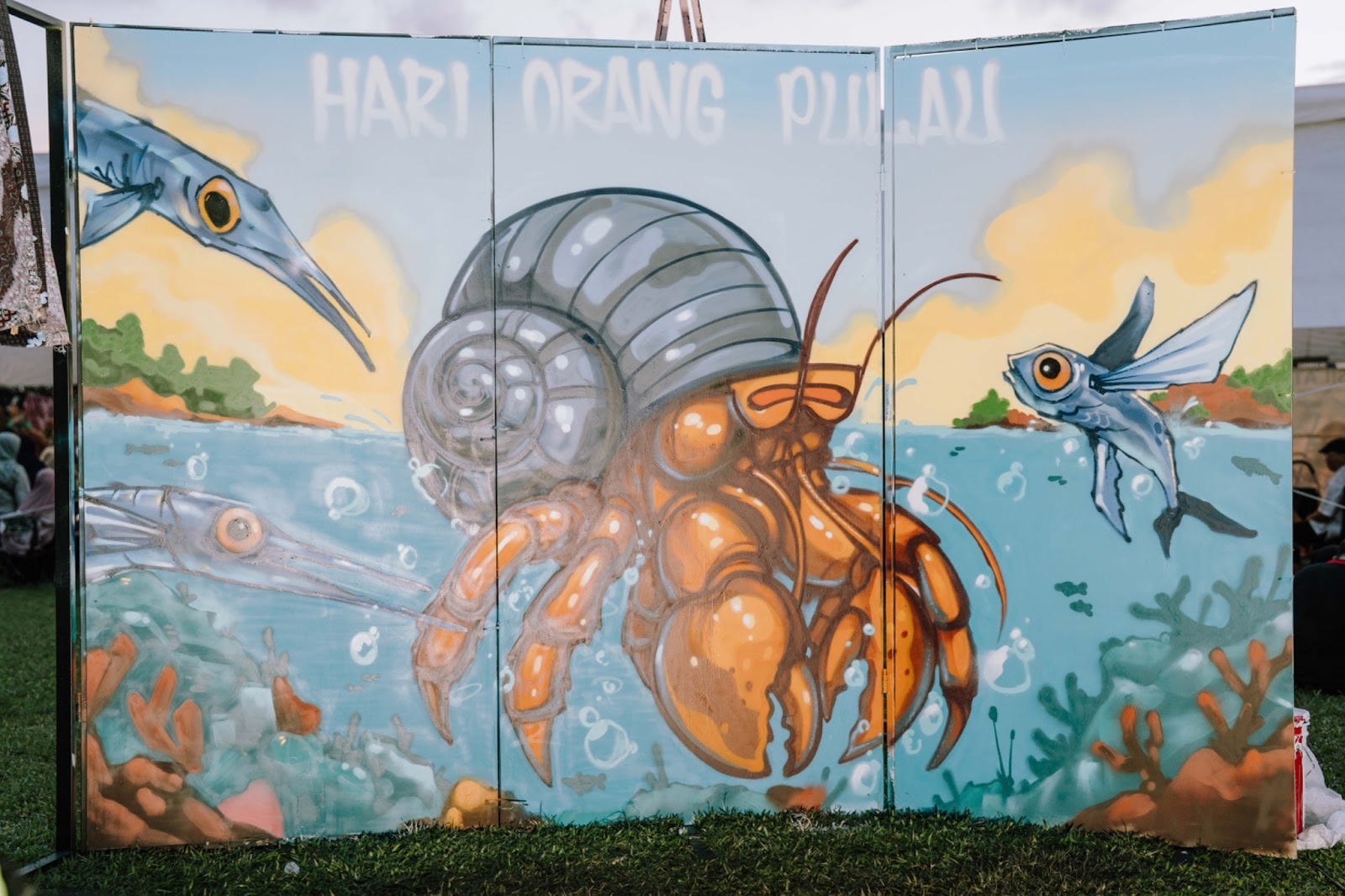
And finally, big love to the boys from The Blackbook Studio for the stunning graffiti piece they created for our garden. You can feel the soul in every stroke. What a gift to have something so bold, beautiful, and rooted now living in our space.
Thanks a million and more
We are deeply grateful to our friends in the media who came alongside us to shine a light on voices that are often unheard. To see elders like Cik Nasir, the heart behind Orkes Melayu Mutiara and the pulse of our Joget Dangkung, grace the pages of The Straits Times and CNA, moves us profoundly.
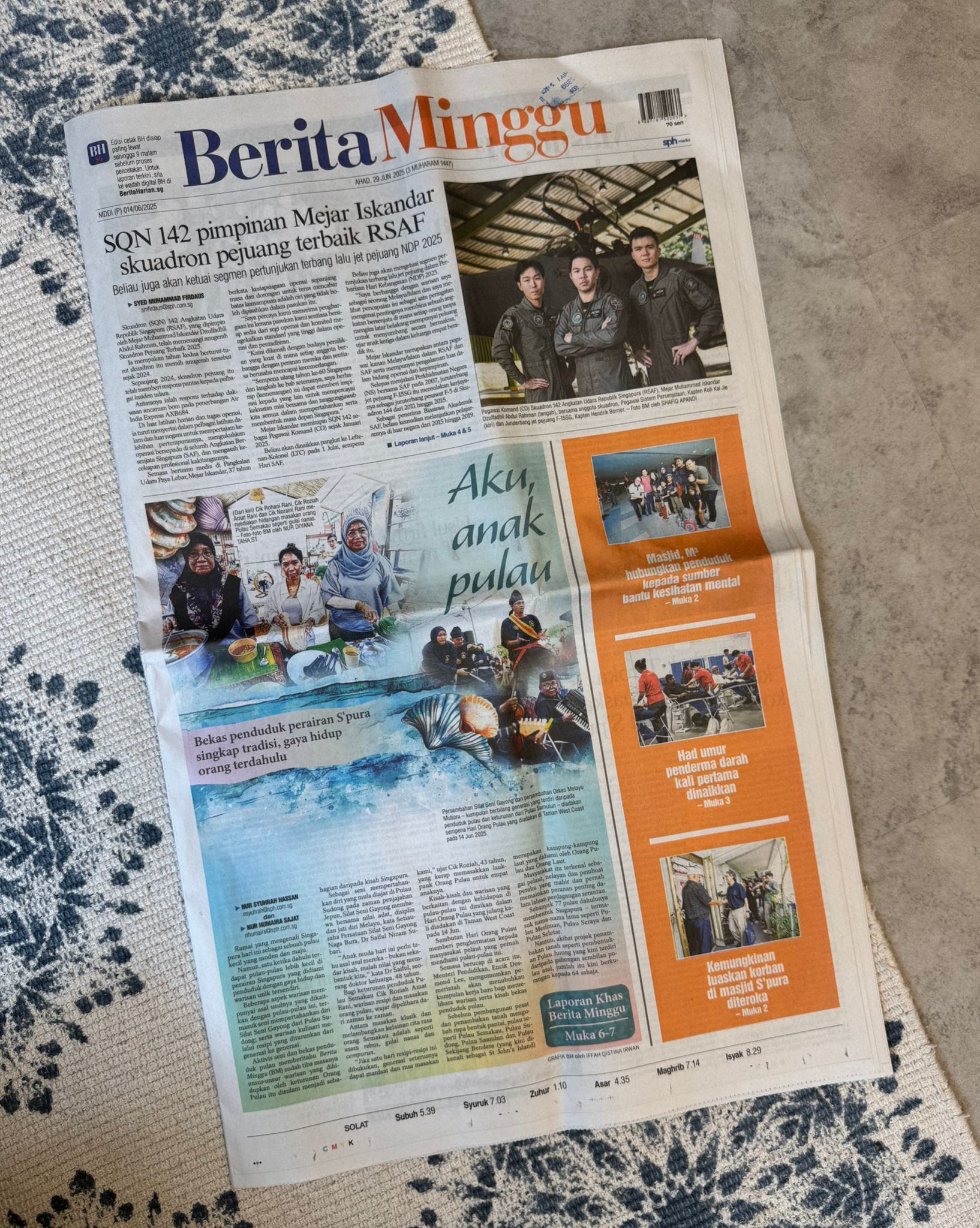
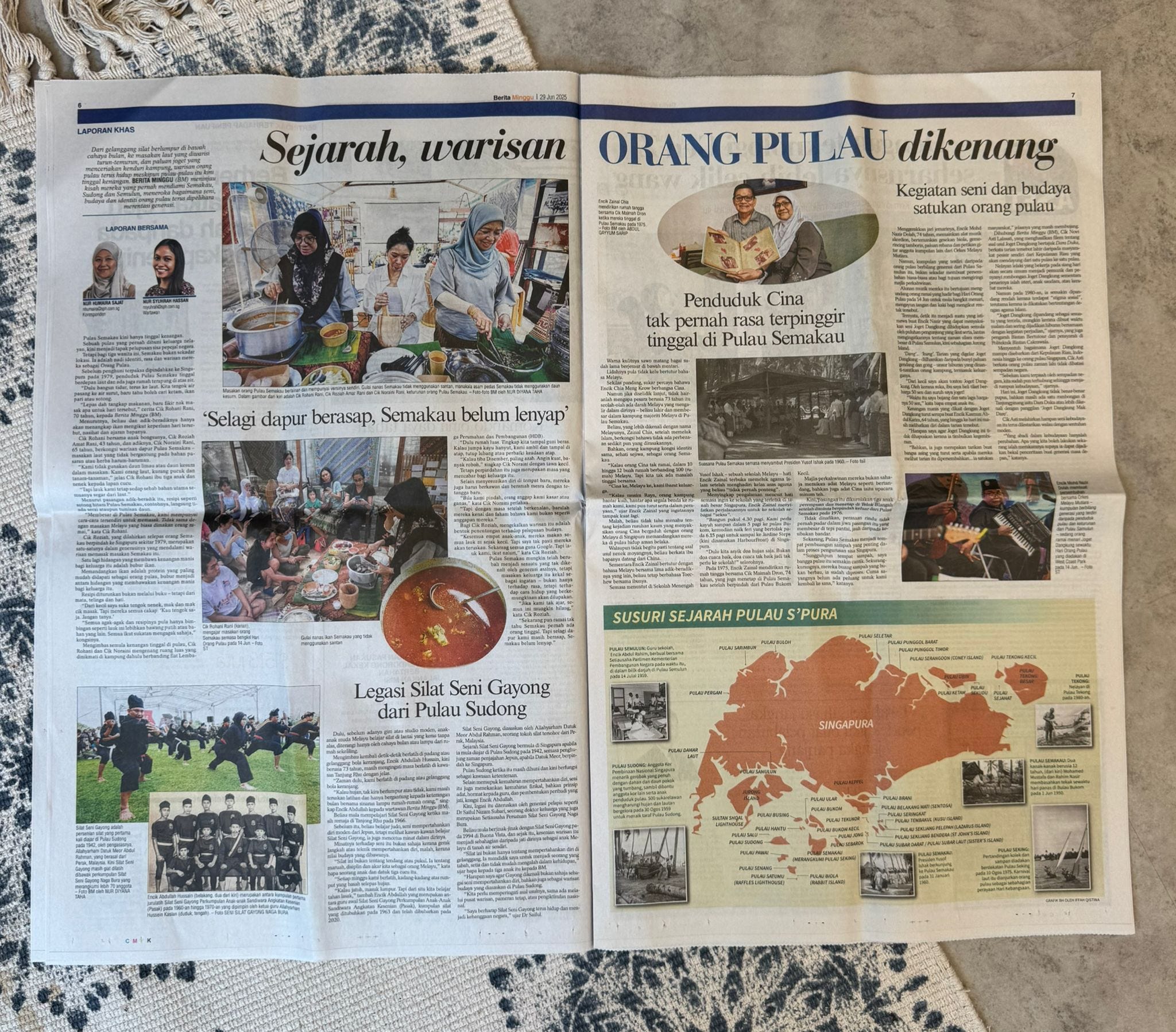
Once, Cik Nasir softened his story, telling others he grew up by Jurong Shipyard instead of Pulau Samulun, to hide the quiet weight of being Orang Pulau. But today, his pride sings clear: “Now, we have a day for island people, so everyone knows where we come from.”
Hari Orang Pulau stands as a living testament, Singapore’s first festival to honour the Orang Pulau and the Indigenous Orang Laut. It is a gentle yet powerful reminder that these communities are not just echoes of the past, but vibrant threads weaving our shared tapestry of home, identity, and belonging.

For our team, it’s words like Cik Nasir’s that make every sleepless night and every moment of exhaustion truly worth it. Even when we joked about escaping to another pulau ourselves, seeing everyone come together to eat, dance, sing, and celebrate with such pride reminded us why we began this journey. It fills us with deep gratitude for everyone who helped bring this vision to life.
As a ground-up initiative, none of this would have been possible without the heart, time, and tireless effort of our community partners and volunteers. Whether you were helping us prepare months in advance, navigating the busy day alongside us, or simply showing up with your energy and belief, thank you. Culture and heritage don’t survive in isolation; they thrive when people unite, roll up their sleeves, and say, “Let’s do this.”
We also want to send a special thank you to those who made the day even more special with their generous support:
National Heritage Board (NHB) and Our SG Fund, for their invaluable grants that helped make Hari Orang Pulau possible.
Potato Productions, for their generous sponsorship and steadfast belief in our cause.
City Sprouts, our venue partner, for welcoming us so warmly to their space at West Coast Park.
Kontinentalist, our thoughtful partners on the community mapping journey, for their care, insight, and dedication.
nOm, our media partner, for cooking, eating, and even venturing out to sea with us - thank you for capturing the spirit of our community.
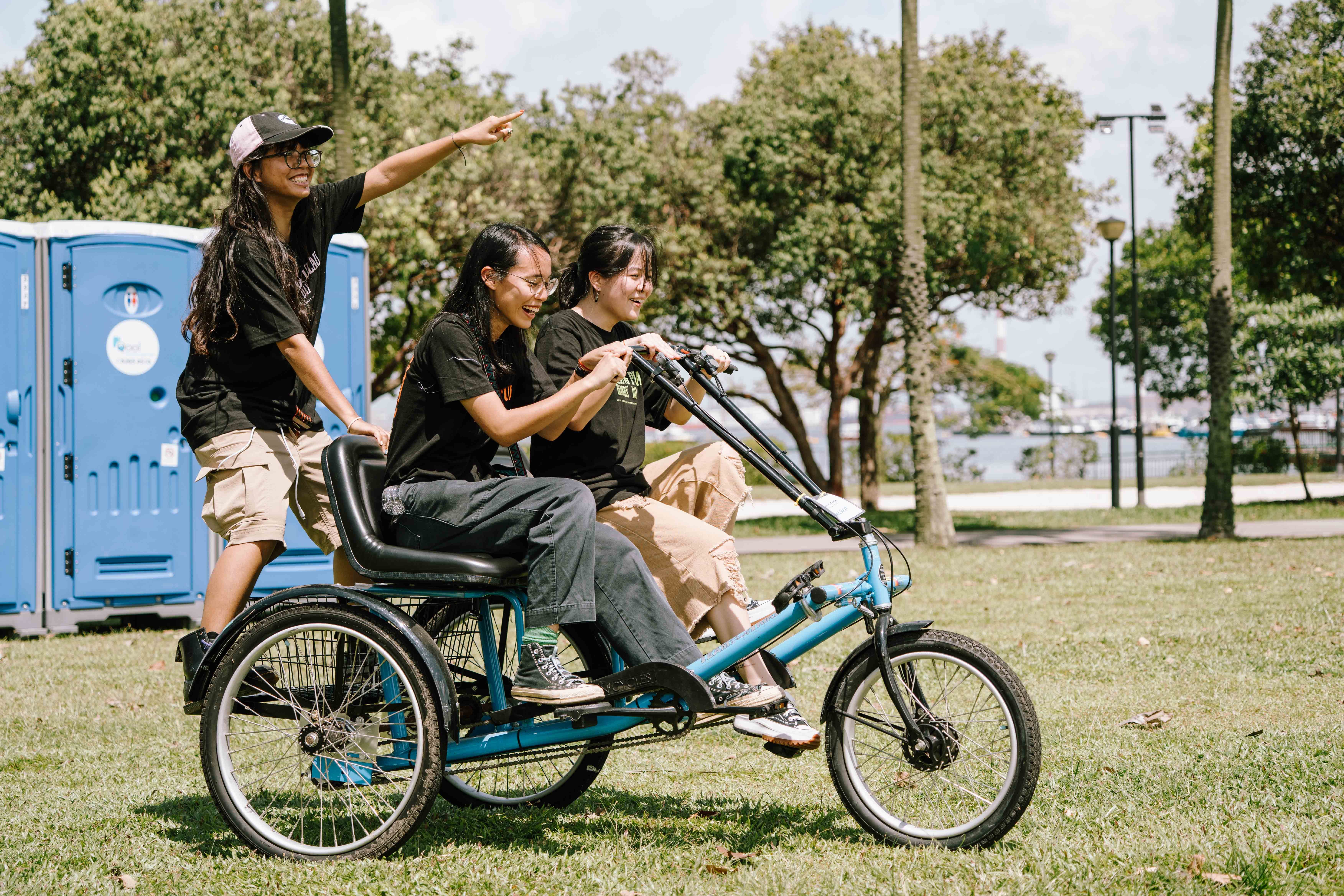
Ageless Bicyclists, our neighbours at West Coast Park, for lending us adaptive bicycles and championing inclusive cycling for all abilities.
We’re truly touched by the incredible response to Hari Orang Pulau. For our ticketed programmes, we wish we had space for every single person who reached out – thank you for your enthusiasm and patience when slots filled up so quickly.
But jangan risau, Hari Orang Pulau may have ended, but we’re already busy dreaming up new, meaningful, and enriching activities for everyone to learn, experience, and connect with the rich heritage of our communities.
If you attended Hari Orang Pulau, please take a moment to fill out our post-event survey. Your feedback means the world to us and will help shape future workshops and programmes that truly reflect the spirit and stories of the Orang Pulau and Orang Laut communities. Plus, you’ll be the first to hear when the next event is coming! We have so many exciting things on the horizon and can’t wait to share them with you.
Jom, onward to the next chapter!
To our passionate volunteers, this one’s especially for you! We’ll be hosting another santai di pantai soon, a casual get-together to say thank you. Come makan, karaoke, and chill as we celebrate the heartwork that made Hari Orang Pulau possible. If you’re interested in volunteering with us in the future, just drop by. Check our Telegram channel for more details. And if you’d like to continue supporting us, you can get Hari Orang Pulau keepsakes from our Ko-fi shop. We can’t wait to see you all again! 💙